The Car Parking Management System Project in Java is a web-based application developed to manage car parking activities online. It is a useful Java project for Computer Science and IT students and can be used as a minor, major, or final-year project.
The main purpose of this project is to replace the manual process of managing parking spaces, vehicle entries, parking bookings, parking tickets, payments, and parking history.
Users can register on the application, check available parking slots, book a slot, make payments, and view their booking details. The admin can manage users, vehicles, parking slots, bookings, payments, and other activities from the admin panel.
The project is developed using Java, JSP, Servlet, MySQL, JDBC, HTML, CSS, and Bootstrap and follows the MVC (Model-View-Controller) architecture.
Car Parking Management System Project in Java
The Car Parking Management System provides an online platform for managing parking spaces and vehicle bookings.
In a traditional parking system, users may need to find available parking spaces manually. Parking records, vehicle details, payments, and tickets may also be maintained manually.
This project helps automate these activities through a web application.
There are two main users in the system:
- Admin
- User
The admin manages the complete parking system, while users can register, book parking slots, make payments, and view their booking history.
Objectives of Car Parking Management System
The main objectives of this project are:
- To provide an easy online parking management system.
- To reduce the manual work involved in managing parking spaces.
- To allow users to book parking slots online.
- To help users check parking slot availability.
- To maintain vehicle and user information in an organized way.
- To manage parking bookings and parking history.
- To manage parking payments.
- To issue parking tickets for confirmed bookings.
- To provide a practical Java web project for students.
Main Features
The major features of the Car Parking Management System include:
- User Registration and Login
- Admin Login
- Parking Slot Management
- Parking Slot Availability
- Advance Parking Booking
- Booking Cancellation
- Parking Ticket Management
- Payment Management
- Vehicle Management
- User Management
- Parking History
- Parking Charges and Rates
- CRUD Operations
- MVC Architecture
- MySQL Database Integration
Modules of Car Parking Management System
The application contains several modules that work together to manage the parking system.
1. Admin Module
The Admin is the main user of the application and has control over the complete parking management system.
Admin can:
- Login and logout.
- Manage parking details.
- Add, update, and delete parking information.
- Manage parking slots.
- Check available parking slots.
- View user bookings.
- Confirm or cancel bookings.
- Manage users and vehicle details.
- Manage payments.
- Issue parking tickets.
- Change parking charges and rates.
- View parking history.
- Change password.
- Manage admin profile.
The admin can use the dashboard to monitor the overall parking activity.
2. User Module
The User module allows customers to register and use the parking services.
Users can:
- Register in the application.
- Login and logout.
- Manage their profile.
- Add and manage vehicle details.
- Check available parking slots.
- Book a parking slot.
- Cancel a booking.
- Make payments.
- View booking details.
- View payment status.
- View parking history.
- Change their password.
This module makes the parking booking process easier for users.
3. Parking Slot Module
The Parking Slot module is used to manage parking spaces.
The admin can:
- Add parking slots.
- View parking slots.
- Update parking slot information.
- Delete parking slots.
- Check slot availability.
- Update slot status.
The system can show whether a particular parking slot is available or already booked.
4. Booking Module
The Booking module allows users to reserve parking slots.
Users can select an available slot and make a booking according to their requirements.
The basic booking process is:
Login → Check Availability → Select Slot → Book Slot → Make Payment → Get Parking Ticket
The admin can view, confirm, or cancel bookings from the admin panel.
5. Payment Module
The Payment module is used to manage parking payments.
Users can make payments for their parking bookings and check their payment status.
The admin can also view payment records and manage payment-related information.
Note: If the project uses a simulated or dummy payment process, it should be treated as a demonstration feature rather than a production payment gateway.
6. Parking Ticket Module
After a successful booking, the system can issue a parking ticket to the user.
The ticket can contain important booking information such as:
- User details
- Vehicle details
- Parking slot
- Booking information
- Date and time
- Parking charges
The ticket helps identify authorized vehicles entering the parking area.
7. Vehicle Management Module
The system maintains information about vehicles registered by users.
The admin can view and manage vehicle details, while users can add their vehicle information to their profile.
This helps keep track of vehicles associated with parking bookings.
8. Parking Availability Module
The availability module helps the admin and users check the current status of parking slots.
Users can use this information before making a booking, while the admin can update slot availability as parking spaces are occupied or released.
CRUD Operations
The project demonstrates basic CRUD operations, which are commonly used in database applications.
CRUD stands for:
- Create – Add a new record.
- Read – View existing records.
- Update – Edit existing information.
- Delete – Remove a record.
For example, the admin can add a parking slot, view its details, update the slot information, or delete it from the system.
User Roles
There are two main roles in the application.
Admin
The admin can:
- Login and logout.
- Manage parking slots.
- Manage parking details.
- View, confirm, and cancel bookings.
- Manage payments.
- Check parking availability.
- Manage users.
- Manage vehicle details.
- Issue parking tickets.
- Change parking charges.
- Manage profile and password.
User
The user can:
- Register and login.
- Manage their profile.
- Add vehicle details.
- Check parking availability.
- Book parking slots.
- Cancel bookings.
- Make payments.
- View booking history.
- View payment information.
- Change password.
MVC Architecture
The Car Parking Management System follows the MVC (Model-View-Controller) architecture.
MVC divides the application into three main parts.
Model
The Model handles the application’s business logic and database operations.
The project uses Java and JDBC to communicate with the MySQL database.
View
The View is responsible for displaying the application interface to users.
The project uses JSP, HTML, CSS, JavaScript, and Bootstrap for the frontend.
Controller
The Controller receives user requests and manages the application flow.
Java Servlets are used as controllers in this project.
Using MVC architecture makes the project easier to understand, maintain, and customize.
Tools and Technologies Used
- Java – Main programming language
- JSP – Web pages and frontend
- HTML – Page structure
- CSS – Page styling
- JavaScript – Client-side functionality
- Bootstrap – Responsive interface
- Servlet – Server-side request handling
- JDBC – Database connectivity
- MySQL – Database
- MVC – Application architecture
- Apache Tomcat 8.5 – Web server
Project Demo
You can watch the project demonstration to understand the interface and basic functionality of the Car Parking Management System:
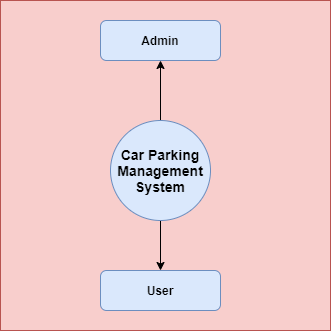
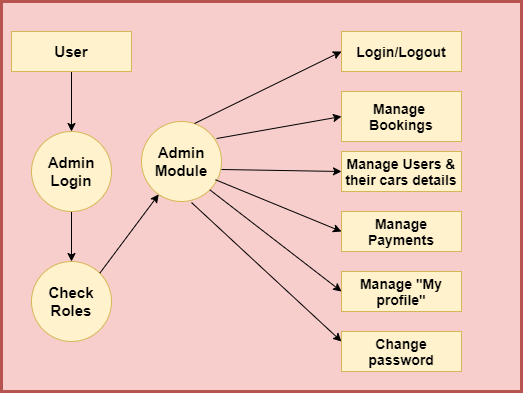
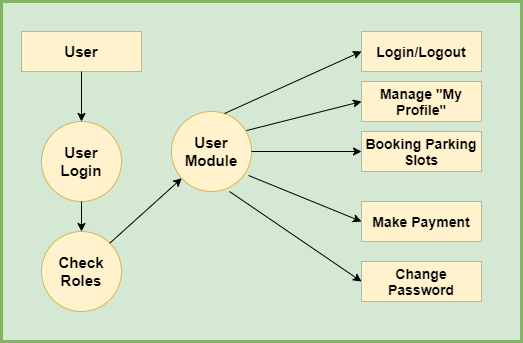
Flow Diagrams / DFD
The Data Flow Diagrams (DFD) help students understand how data moves between users, the application, and the database.
These diagrams can also be useful while preparing a project report, documentation, presentation, or viva.

Free Source Code
The Car Parking Management System Project in Java source code is available on GitHub.
Students can use the source code to:
- Learn Java web development.
- Understand the project structure.
- Study JSP and Servlet implementation.
- Learn MySQL database connectivity.
- Understand MVC architecture.
- Configure and run the project.
- Customize the project for their college requirements.
Download Free Source Code
Download Car Parking Management System Source Code on GitHub
Note: Before running the project, make sure the required Java, MySQL, JDBC, and Tomcat configuration is completed.
How to Configure a Java Web Project
If you are new to Java web application development, follow a step-by-step guide to learn how to configure and run a Java web project.
How to Configure a Java Web Project
Java Project Viva Questions and Answers
Preparing for your college project viva? Check these Java project viva questions and answers to prepare for common questions about your project, database, technologies, and architecture.
Java Project Viva Questions and Answers
More Java Projects with Source Code
Looking for more Java projects for your minor, major, or final-year project?
Explore More Java Projects with Source Code
Conclusion
The Car Parking Management System Project in Java using JSP, Servlet, and MySQL is a useful project for students who want to learn how to build a Java web application.
The project covers important concepts such as user registration, parking slot management, online booking, vehicle management, parking tickets, payments, CRUD operations, JDBC, MySQL, JSP, Servlet, and MVC architecture.
Students can download the free source code from GitHub, study the project, configure it on their computer, and customize it according to their project requirements.
Some additional features that can be added in the future include QR-based parking tickets, automatic slot allocation, real-time parking availability, online payment gateway integration, SMS/email notifications, parking reports, and an advanced admin dashboard.