Restaurant Management Project in Java is a Java web application developed using JSP, Servlet, and MySQL. The project is designed to automate and manage various day-to-day activities of a restaurant, including store management, table management, product management, staff management, order creation, and bill generation.
The Restaurant Management Project provides separate modules for Admin and Staff. Admin is responsible for managing restaurant information, products, categories, stores, tables, companies, and staff. Staff can view product and table information, create customer orders, and generate invoices.
The project performs common CRUD (Create, Read, Update, and Delete) operations for managing different types of information. It follows the MVC (Model-View-Controller) architecture, where JSP is used for the View, Servlet handles server-side requests and responses, and MySQL is used as the backend database.
Restaurant Management Project in Java
The Restaurant Management Project in Java is a web-based application developed to automate restaurant management activities.
In a traditional restaurant, maintaining records of products, tables, stores, categories, orders, staff, and bills manually can take considerable effort. This project provides a centralized application where these activities can be managed digitally.
The Admin can manage the main restaurant information through the administration panel. Admin can add, view, update, and delete stores, tables, categories, products, company information, and staff details.
Staff members can use the information maintained by Admin to view available products and tables, create orders, and generate invoices for customers.
The system also allows Admin to view important information such as the total number of products, users, and stores, as well as the paid bill status.
This project can be useful for students looking for a Java web application project with source code using JSP, Servlet, and MySQL.
Objectives of Restaurant Management Project
The major objectives of the Restaurant Management Project are:
- To provide a web-based restaurant management system for Admin and Staff.
- To automate common restaurant management activities.
- To allow Admin to manage products and categories.
- To allow Admin to manage restaurant tables and stores.
- To allow Admin to manage company and staff information.
- To allow Staff to view product and table information.
- To allow Staff to create customer orders.
- To allow Staff to generate invoices.
- To maintain restaurant-related records in a centralized database.
- To make restaurant information easier to access and manage.
How the Restaurant Management System Works
The basic workflow of the application is:
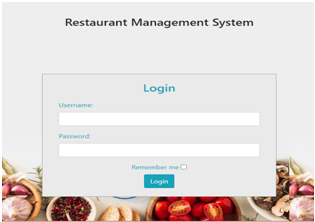
- Admin logs into the Restaurant Management System.
- Admin manages stores, tables, categories, products, companies, and staff.
- Staff can log in and access the information provided by Admin.
- Staff views available products and table information.
- Staff creates an order according to the customer’s requirements.
- The system maintains the order information.
- Staff generates an invoice for the order.
- Admin can view the paid bill status.
- Admin can continue managing restaurant information through the administration panel.
This workflow helps reduce manual record keeping and provides a centralized system for restaurant activities.
Modules and Functionalities of Restaurant Management Project
There are two main types of users in the application:
- Admin
- Staff
Each role has different responsibilities and functionalities.
1. Admin Module
Admin is the main user responsible for managing the restaurant’s information and day-to-day management activities.
Store Management
Admin can manage store information through the application.
Admin can:
- Add store information.
- View store information.
- Update store information.
- Delete store information.
Table Management
Admin can manage restaurant table information.
Admin can:
- Add table information.
- View table information.
- Update table information.
- Delete table information.
This helps maintain information about the tables available in the restaurant.
Category Management
Admin can manage product categories.
Admin can:
- Add categories.
- View categories.
- Update categories.
- Delete categories.
Categories help organize the products available in the restaurant.
Product Management
Admin can manage restaurant products.
Admin can:
- Add products.
- View products.
- Update products.
- Delete products.
This allows the restaurant to keep its product information updated.
Company Management
Admin can manage company information through the application.
Admin can:
- Add company information.
- View company information.
- Update company information.
- Delete company information.
Staff Management
Admin can manage staff information.
Admin can:
- Add staff information.
- View staff information.
- Update staff information.
- Delete staff information.
Admin Profile
Admin can view and update their own information through the profile section.
Dashboard Information
Admin can view important summary information, including:
- Total products.
- Total users.
- Total stores.
This provides an overview of the information managed by the system.
Paid Bill Status
Admin can view the paid bill status through the application.
This helps Admin monitor bill-related information maintained in the system.
2. Staff Module
The Staff module is designed for employees who handle customer orders and restaurant operations.
View Product Information
Staff can view the product information added and managed by Admin.
This allows Staff to check the available products while taking customer orders.
View Table Information
Staff can view table information maintained by Admin.
This helps Staff access the available restaurant table information.
Create Orders
Staff can create customer orders through the application.
Instead of maintaining the order manually, Staff can enter the order into the web application.
Generate Invoice
After creating an order, Staff can generate an invoice for the customer.
This provides a structured way to manage order and billing information.
Restaurant Product and Category Management
Products are an important part of restaurant operations. Admin can add products and organize them using categories.
Admin can update or delete product information whenever required. Staff can then view the available product information while creating customer orders.
This provides a simple connection between product management and order creation.
Table Management
The system also provides table management functionality.
Admin can add, view, update, and delete table information. Staff can view the available table information while handling restaurant orders.
Order and Invoice Management
Staff can create customer orders through the application and generate an invoice for those orders.
The system helps reduce manual order and billing records by maintaining the information digitally.
Admin can also view the paid bill status from the administration section.
CRUD Operations
The Restaurant Management Project performs CRUD operations for managing different types of records.
CRUD stands for:
- Create – Add new records.
- Read – View existing records.
- Update – Modify existing information.
- Delete – Remove records.
CRUD functionality is used for managing stores, tables, categories, products, companies, and staff information.
MVC Architecture
The Restaurant Management Project follows the MVC (Model-View-Controller) architecture.
Model
The Model layer handles the application’s business logic and data-related operations. MySQL is used as the backend database for storing application records.
View
JSP is used to create the View layer of the application. HTML and CSS are used to design the user interface.
Controller
Servlet is used as the Controller. It handles server-side requests and responses and controls the flow of information between the View and the application’s backend logic.
The MVC architecture separates the presentation, business logic, and request-handling components, making the application easier to understand and maintain.
Database
MySQL is used as the backend database of the Restaurant Management Project.
The database can store information related to:
- Admin
- Staff
- Users
- Stores
- Tables
- Categories
- Products
- Companies
- Orders
- Invoices
- Bill/payment status
This centralized database helps maintain restaurant information in an organized way.
Key Features of Restaurant Management Project
Some important features of this Java project include:
- Admin and Staff modules.
- Store management.
- Restaurant table management.
- Category management.
- Product management.
- Company management.
- Staff management.
- Product and table information for Staff.
- Customer order creation.
- Invoice generation.
- Paid bill status.
- Admin dashboard information.
- CRUD operations.
- MVC architecture.
- MySQL database integration.
Technologies Used in Restaurant Management Project
Technology/Domain: Java
Frontend: JSP, HTML, CSS
Server-side: Java Servlet
Database: MySQL
Server: Apache Tomcat 8.5
Architecture: MVC
Project Suitability
The Restaurant Management Project in Java can be used as an academic Java web application project. It is suitable for students who want to learn how a database-driven restaurant management application can be developed using JSP, Servlet, and MySQL.
The project can be useful for:
- BCA students
- MCA students
- Computer Science students
- Information Technology students
- Java web development learners
- Minor project development
- Major/final-year project development
Students can learn practical concepts such as CRUD operations, MVC architecture, database management, role-based modules, product management, order processing, and invoice generation.
Demo of Restaurant Management Project
You can watch the project demo to understand the working of the Restaurant Management Project and its Admin and Staff modules:
Java Web Project Configuration Tutorial
If you want to configure and run this Java web project on your computer, you can follow the Java Web Project Configuration Tutorial:
https://codebun.com/java-web-project-configuration/
This tutorial provides guidance for configuring and running Java web application projects.
Free Project Source Code and Project Report
The Restaurant Management Project in Java is available with free project source code. Students can use the source code to understand the project structure and learn how JSP, Servlet, and MySQL can be used to build a restaurant management application.
The project can also be customized according to academic requirements and used as a reference for developing similar restaurant, order management, or billing applications.
Get Free Source Code on GitHub
You can get the free source code of the Restaurant Management Project from GitHub:
https://github.com/jcodebun/Restaurant-Management-System.git