Timetable Management System in Java using JSP and Servlet is a web-based application developed to computerize the process of creating, managing, and viewing academic timetables. The system helps Admin, Teachers, and Students manage class schedules, subjects, exams, assignments, and other academic activities from a single platform.
This project is suitable for 2nd-year, 3rd-year, and final-year IT and Computer Science students for their college minor or major projects. The complete project is available with free source code and can be used for learning and academic purposes.
Timetable Management System Overview
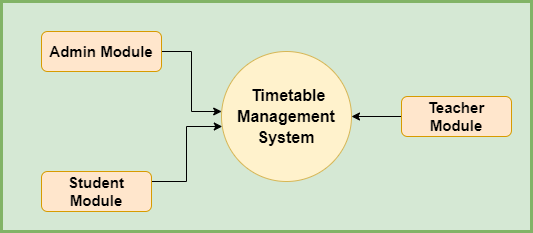
Timetable Management System is a multi-role Java web application with three main roles: Admin, Teacher, and Student. The Admin has primary control over the system and is responsible for managing teachers, students, and other system information.
Teachers can register on the system and manage student timetables, maintain student records, schedule exams, upload assignments, and manage academic information. Teachers can also create, edit, and remove timetables according to class requirements.
Students can log in to the system and view their class timetables, subjects, teacher details, exam schedules, assignments, study materials, marks, and results.
The complete project is developed using JSP and Servlet. HTML, CSS, JavaScript, and Bootstrap are used for the front end. JDBC is used for database connectivity, while MySQL is used as the database. The project follows the MVC (Model View Controller) design pattern.
Free Source Code of Timetable Management System
The complete Timetable Management System project source code is available for free. Students can download the source code and use it to understand the development of a Java web application using JSP, Servlet, JDBC, MySQL, and MVC architecture.
Free Project Source Code:
https://github.com/jcodebun/Time-Table-Management.git
Timetable Management System Abstract
Timetable Management System is designed as a centralized platform for creating and managing academic timetables for students. A well-managed timetable helps educational institutions organize classes, subjects, teachers, examinations, assignments, and other academic activities.
The system helps teachers plan and manage student timetables from a single platform. It also helps organize classes so that teachers and students can easily access their respective schedules.
Codebun has developed this Timetable Management System in Java with three main roles: Admin, Teacher, and Student. The Admin controls the overall system and manages student and teacher information.
Admin can add, update, and delete system information and maintain student and teacher records. Teachers can create and manage timetables, maintain student records, schedule or conduct exams, upload assignments, and manage results and marks.
Students can view their class timetables, subjects, class timings, teacher information, exam schedules, assignments, homework, study materials, marks, and results. Students can also upload assignments and interact with teachers through the system.
The major objectives of the Timetable Management System are:
- To provide a simple and user-friendly timetable management application.
- To develop a secure and reliable Timetable Management System.
- To maintain records of timetables, students, teachers, subjects, examinations, and results.
- To help teachers create and manage academic timetables.
- To provide students with easy access to their class and examination schedules.
- To manage academic information from a single platform.
Modules of Timetable Management System
Admin Module
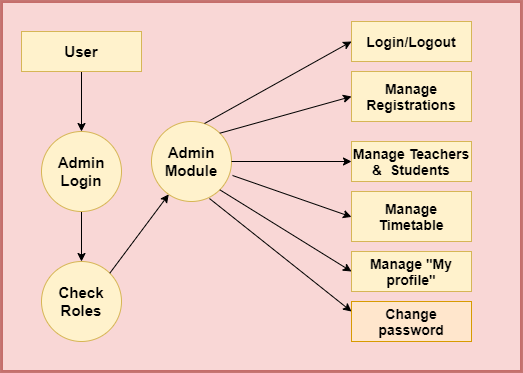
The Admin Module provides complete control over the system. Admin can manage student and teacher information and maintain the overall system.
Admin can:
- Register and log in to the system.
- Add, edit, and delete faculty members.
- Add, edit, and delete students.
- Manage student and faculty records.
- Maintain student and teacher databases.
- Send notifications to students and faculty members.
- Manage the Admin profile.
- Change the password.
Student Module
The Student Module allows students to access their academic information after registration and login.
Students can:
- Register on the system.
- Log in and log out.
- View their class timetable.
- View subjects and teacher details.
- View exam schedules.
- Attend tests and examinations conducted by teachers.
- View marks and results.
- View assignments and study materials.
- Upload assignments.
- Contact teachers.
- Manage their profile.
- Change their password.
Teacher Module
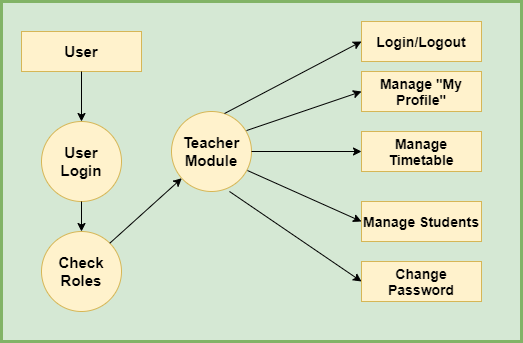
The Teacher Module allows faculty members to manage timetables and academic activities.
Teachers can:
- Register on the system.
- Log in and log out.
- View faculty information.
- Create timetables.
- Edit and remove timetables.
- Maintain student records.
- Schedule and conduct examinations.
- Add and manage marks and results.
- Upload assignments and study materials.
- View and download assignments submitted by students.
- Send important messages to students.
- Manage their profile.
- Change their password.
User Roles
Three types of users can interact with the Timetable Management System:
- Admin
- Teacher
- Student
Admin
The Admin can:
- Log in and log out of the system.
- Add, edit, view, and delete faculty members.
- Add, edit, view, and delete students.
- Manage student and faculty records.
- Send notifications.
- Manage the Admin profile.
- Change the password.
Teacher
The Teacher can:
- Log in and log out of the system.
- View faculty information.
- Create, edit, and remove timetables.
- Add and manage assignments.
- Add marks and results.
- Upload study materials.
- Schedule and conduct examinations.
- View assignments submitted by students.
- Upload assignments and academic materials.
- Send important messages to students.
- Manage the Teacher profile.
- Change the password.
Student
The Student can:
- Log in and log out of the system.
- View their timetable.
- View exam schedules.
- Attend tests and examinations.
- View results and marks.
- View assignments and study materials.
- Upload assignments.
- Contact teachers.
- Manage the Student profile.
- Change the password.
Demo of Timetable Management System
You can watch the project demo to understand the working of the Timetable Management System and its Admin, Teacher, and Student modules.
Flow Diagram of Timetable Management System
Level 0 DFD

Level 1 DFD
Level 2 DFD
Additional Level 2 DFD
Tools and Technologies Used
Technology/Domain: Java
Front-End: JSP, HTML, CSS, JavaScript, Bootstrap
Server-side: Servlet
Database: MySQL
Database Connectivity: JDBC
Server: Apache Tomcat 8.5
Design Pattern: MVC
Java Web Project Configuration
To configure and run this Java web project on your local computer, follow the Java Web Project Configuration tutorial:
https://codebun.com/java-web-project-configuration/
Get Free Source Code
The complete Timetable Management System source code is available for free. Students can download the source code and use the project for learning, academic purposes, and college project demonstrations.
GitHub Source Code:
https://github.com/jcodebun/Time-Table-Management.git
Conclusion
Timetable Management System is a Java web application designed to simplify the creation and management of academic timetables. It provides separate Admin, Teacher, and Student modules for managing timetables, subjects, examinations, assignments, marks, results, and other academic information.
The project is developed using Java, JSP, Servlet, JDBC, MySQL, HTML, CSS, JavaScript, and Bootstrap. It is suitable for 2nd-year, 3rd-year, and final-year IT and Computer Science students looking for a Java web project with free source code.